The transport of liquefied gases such as LPG (Liquefied Petroleum Gas) and ammonia represents a major challenge for industrial players and supply chain stakeholders. Between strict regulatory requirements, safety imperatives, logistics cost optimization, and emissions reduction, the European market is now seeking more efficient, flexible solutions adapted to modern needs.
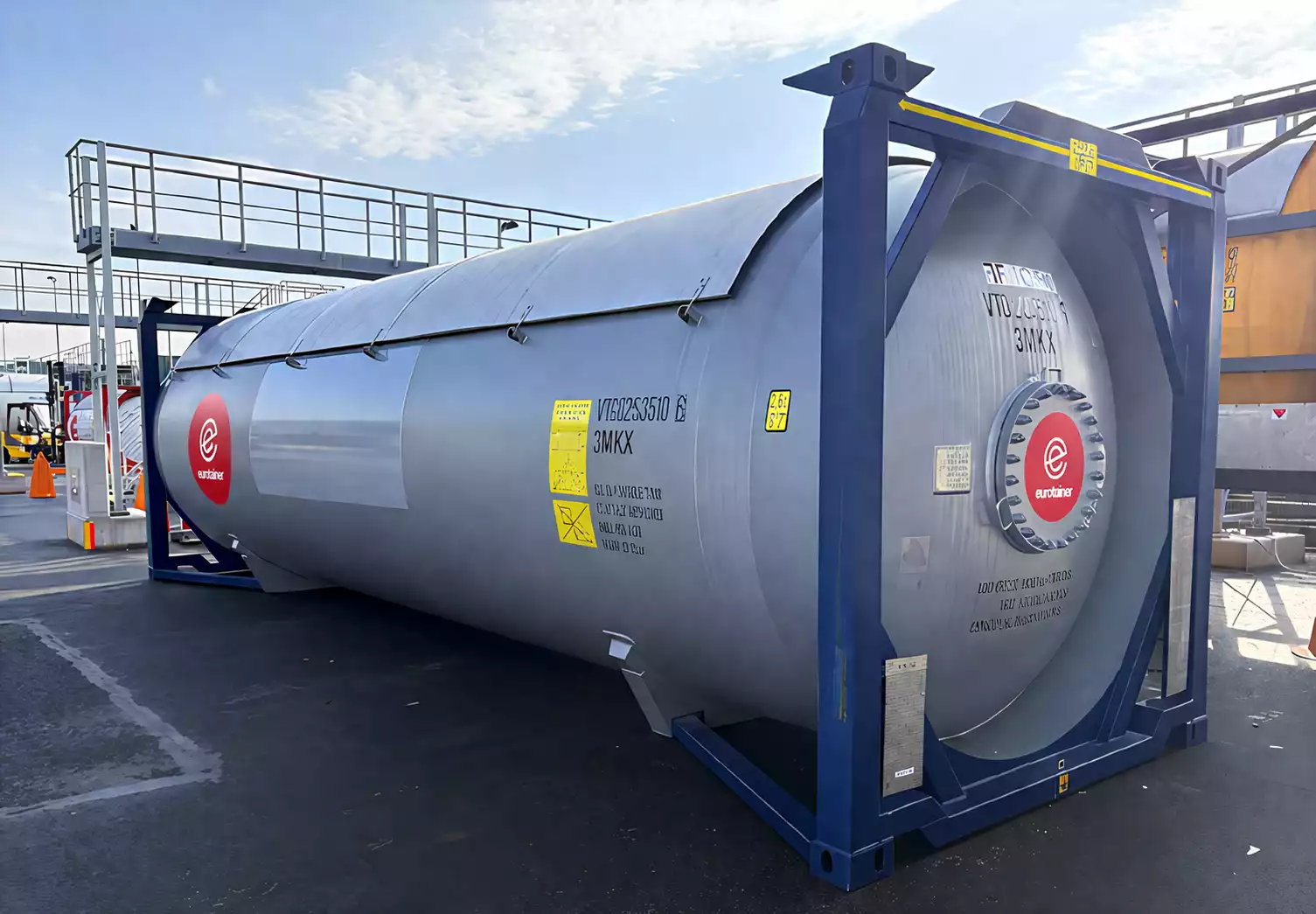
In this context, the introduction of side discharge gas containers represents a strategic advancement for companies operating in the energy and chemical distribution sectors. Designed to improve handling during delivery, particularly in constrained environments, this specific equipment is a direct response to the limitations of traditional tank containers.
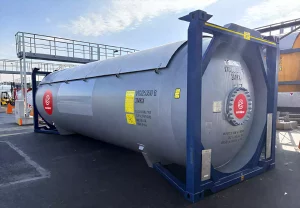
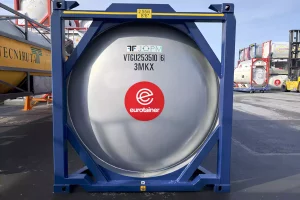
This model of gas tank container is available in 20-foot and 30-foot formats, with a design intended for intermodal transport (road/rail) and distribution focused on the continental markets.
A key feature innovation: side discharge for simpler and faster handling
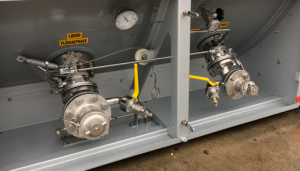
One of the main advantages of this gas container is its side discharge system, a technical feature that transforms the way products are loaded and unloaded.
Traditionally, many tank containers require rear access or a specific clearance area around the vehicle. This can create significant on-site constraints: lack of space, alignment difficulties, long maneuvering times, and sometimes even the impossibility of delivering in certain industrial zones or logistics platforms.
Thanks to this design, side discharge enables:
- Faster connection to customer installations,
- Reduced vehicle downtime,
- Improved accessibility in restricted areas,
- Easier handling for operators,
- Enhanced safety during product transfer.
This innovation perfectly addresses real-world operational constraints: industrial depots, port areas, rail terminals, logistics hubs, and European storage sites where every minute of operation matters.
A solution adapted to LPG and ammonia transport
This container is specifically designed to carry sensitive and regulated products, including:
- LPG (propane, butane, and LPG blends)
- Ammonia
These products are widely used in Europe and other continental areas across strategic sectors: energy, agriculture, chemicals, pharmaceuticals, and fertilizer production.
The container meets the requirements for transporting liquefied gases under pressure, ensuring a high level of reliability and safety for logistics operations.
Available formats: 20-foot and 30-foot gas tanks
To meet different transport volumes and operational needs, the new gas container is offered in two formats:
20-foot gas tank
The 20-foot format is ideal for:
- Split deliveries,
- Operations requiring greater flexibility,
- Intermodal routes with infrastructure constraints,
- Regular flows to multiple customers.
It is particularly suited to supply chains requiring fast rotations and easy integration into existing networks.
30-foot gas tank
The 30-foot format allows:
- Higher transport volume,
- Reduced cost per transported ton,
- Optimized flows for large industrial sites,
- Improved profitability over long distances.
This format fits into a massification strategy, highly relevant for European road/rail corridors.
A multimodal solution designed for road and rail
The evolution of hazardous materials transport in Europe is marked by a strong trend: the development of multimodal solutions. Companies are now seeking equipment capable of operating efficiently across multiple transport modes while minimizing handling breaks.
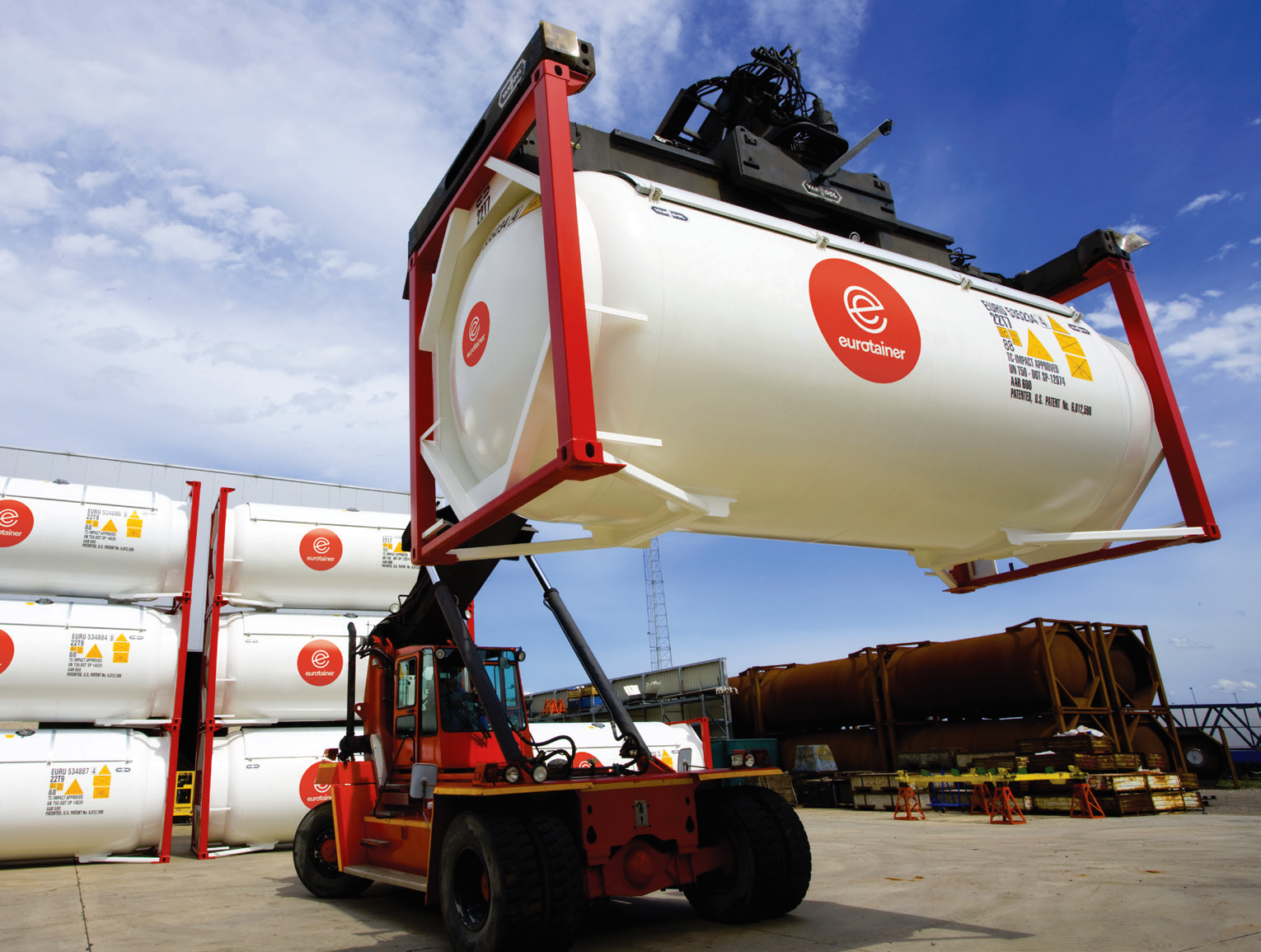
This side discharge gas container has been designed as a road/rail multimodal solution, fully compatible with European intermodal standards and also suitable for rail only operations with perfect accessibility of loading and discharge connections
Benefits of intermodal transport (road/rail)
The combined use of road and rail enables:
- Reduced CO₂ emissions,
- Better cost control over long distances,
- Reduced dependence on truck drivers,
- More reliable logistics continuity during road transport disruptions,
- Improved compliance with European environmental policies.
This container is therefore a strategic logistics tool for companies seeking to modernize their supply chain while meeting sustainability requirements.
A container capable of replacing road tankers and rail tank wagons
One of the most important aspects of this solution is its ability to effectively replace and complement:
- Road tankers,
- Rail tank wagons
thanks to its side discharge equipment.
Why replace traditional tankers?
Road tankers offer great flexibility but involve:
- Strong dependence on road transport,
- High long-distance costs,
- Significant carbon footprint,
- More constrained intermodal loading availability.
Rail tank wagons, on the other hand, are efficient for rail transport but have limitations:
- Complex management,
- Long immobilization times,
- Need for suitable rail infrastructure,
- Rigid operation and lack of flexibility for final deliveries.
The gas container combines the best of both worlds: it operates on both rail and road while enabling simpler delivery thanks to side discharge.
With its robust design and intermodal orientation, this gas container fully aligns with the modernization of distribution in Europe.
It is a concrete response to the needs of operators seeking to secure LPG and ammonia flows on cross-border routes while optimizing operational profitability.
Greater practicality during unloading: a major competitive advantage
In operational reality, unloading is often the most complex and costly stage of a liquefied gas delivery. Poor site access can result in:
- Significant delays,
- Dangerous maneuvers,
- Prolonged equipment downtime,
- Higher labor costs,
- Reduced overall productivity.
With a side discharge system, the operator can connect more easily to customer installations, even when space is limited.
Use cases where side discharge makes the difference
- Industrial platforms with restricted access,
- Urban or semi-urban depots,
- Intermodal terminals with complex alignment,
- Temporary storage sites,
- Port areas with heavy traffic.
This practicality becomes a major competitive advantage, especially for carriers and distributors aiming to increase daily deliveries while improving safety.
An ideal solution for LPG and ammonia distribution players in Europe
European demand for LPG and ammonia continues to evolve, driven by:
- Growth in industrial applications,
- Demand for fertilizers and agricultural solutions,
- Rising alternative energy solutions,
- Development of rail and sustainable logistics corridors.
This new container therefore targets several types of stakeholders:
- LPG distributors,
- Ammonia producers and suppliers,
- Hazardous materials logistics operators,
- Rail and intermodal operators,
- Industrial companies seeking to internalize part of their transport.
Its standardized format and intermodal compatibility facilitate integration into existing fleets and enable rapid adoption.
Safety, performance, and cost optimization
Beyond practicality, the intermodal approach also helps reduce overall transport costs, particularly over long European distances.
By partially replacing road tankers with a road/rail solution, companies can:
- Reduce road mileage,
- Lower fuel costs,
- Stabilize costs during energy price fluctuations,
- Optimize equipment availability,
- Improve logistics planning reliability.
In addition, reducing the number of product transfers lowers incident risks, improving overall transport chain safety.
A new strategic tool for intermodal liquefied gas transport
This new gas tank container with side discharge marks an important step in the evolution of LPG and ammonia transport in Europe. Its design addresses real operational challenges: site accessibility, delivery speed, enhanced safety, and multimodal optimization.
Thanks to its 20-foot and 30-foot formats, it offers remarkable flexibility and adapts both to regular deliveries and large-scale industrial flows.
Most importantly, it enables a truly sustainable logistics strategy by facilitating the shift to rail without sacrificing the practicality required for final distribution.
Conclusion: a next-generation gas container designed for European efficiency
In a market where logistics performance is a decisive factor, this new gas container provides a concrete response to real-world needs. Side discharge, combined with a design adapted to multimodal road/rail transport, makes this product a modern alternative to road tankers and rail tank wagons.
For LPG and ammonia transport, this container becomes an essential piece of equipment for companies seeking to improve competitiveness, secure operations, and modernize their distribution chain in Europe.
With this innovation, intermodal transport enters a new phase: simpler, more practical, more flexible — and above all better suited to today’s logistics challenges.
Contact our expert for more detail.