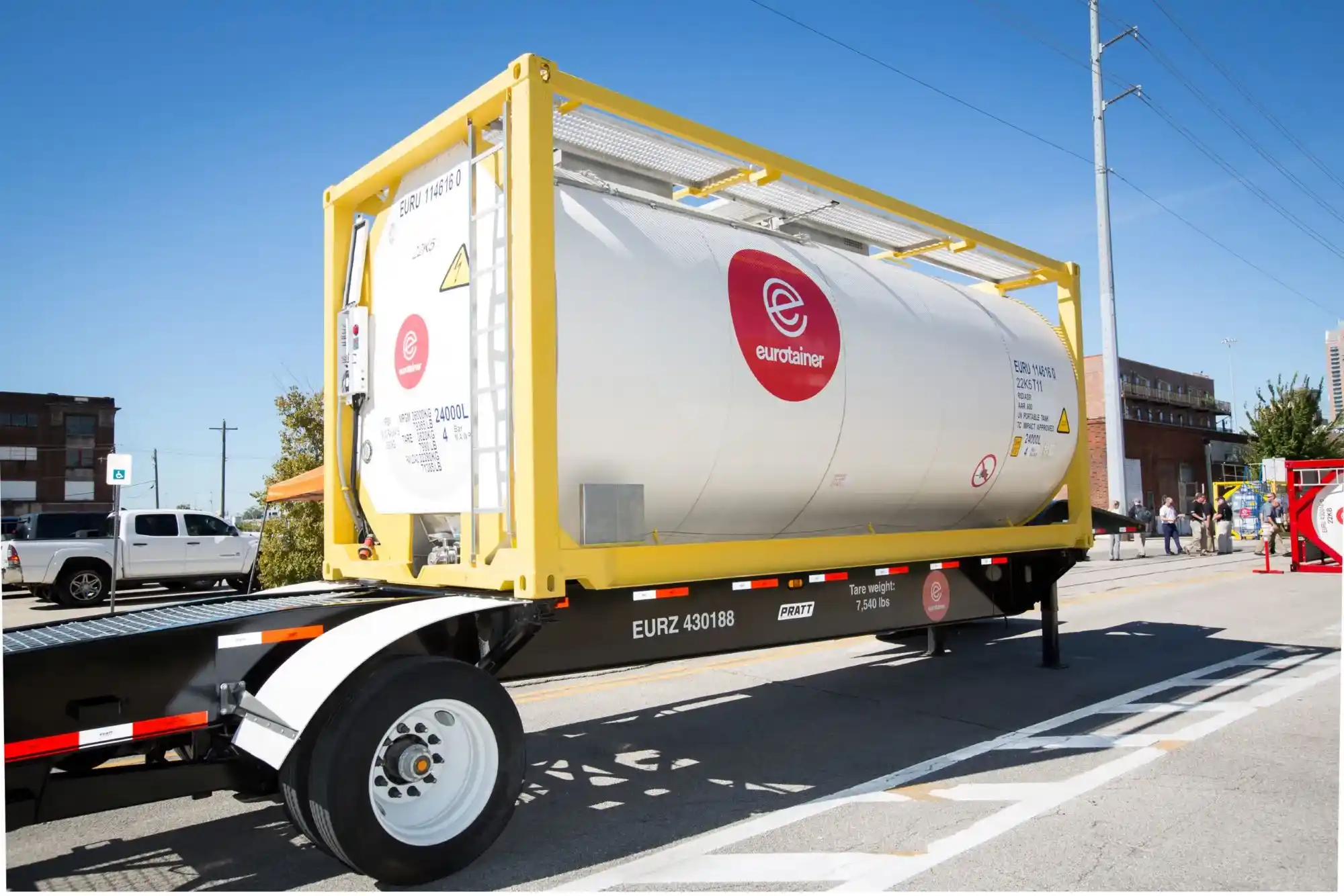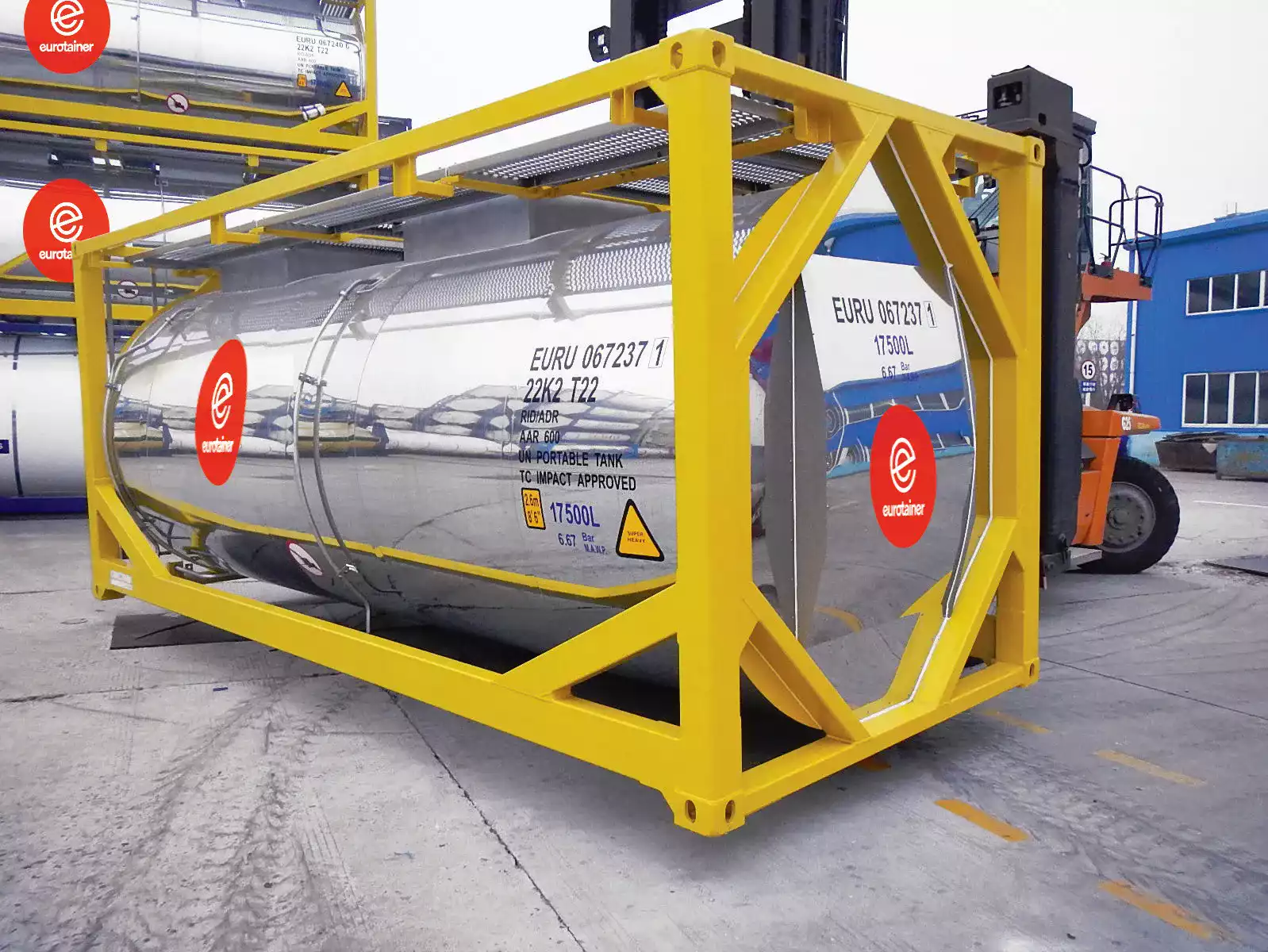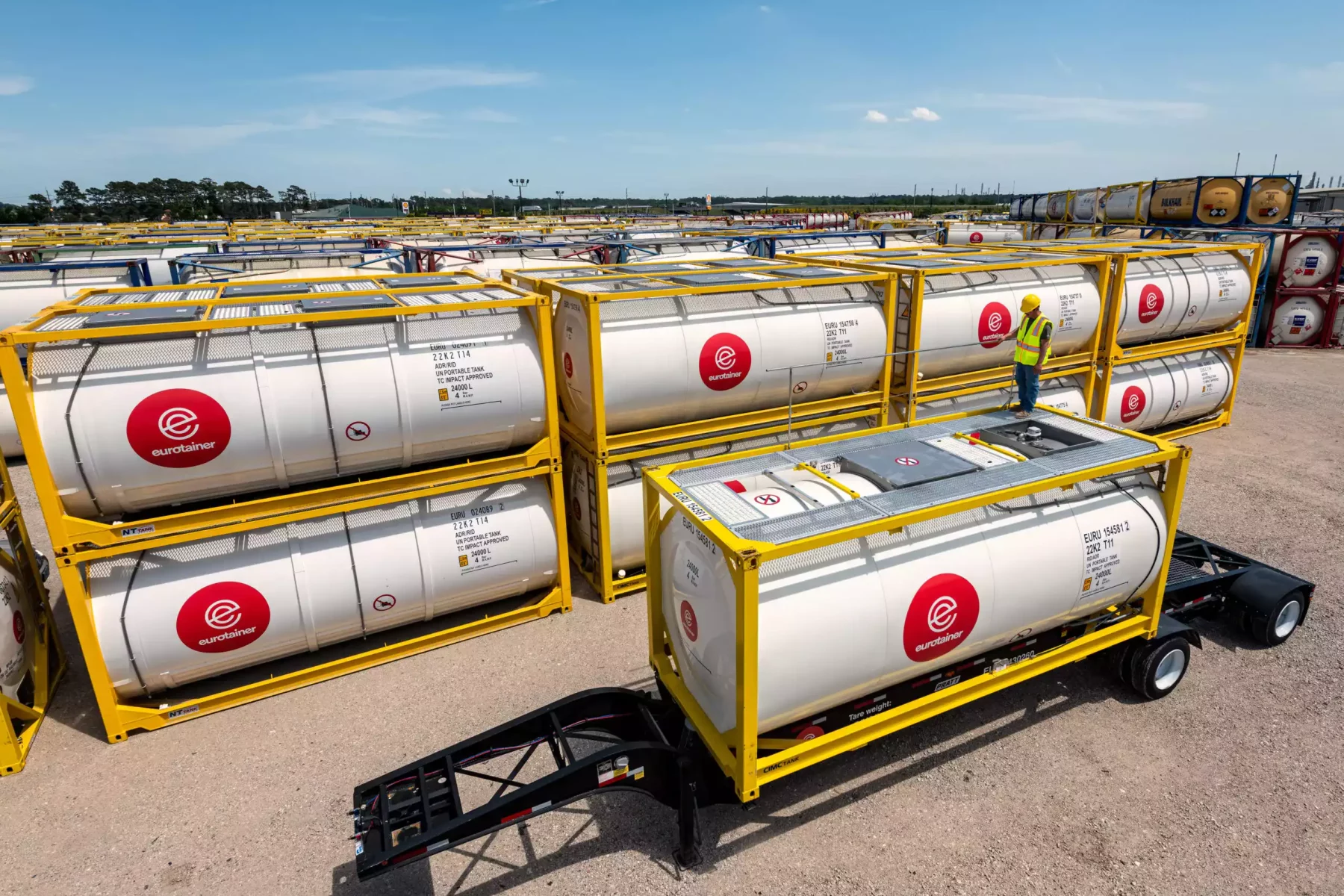

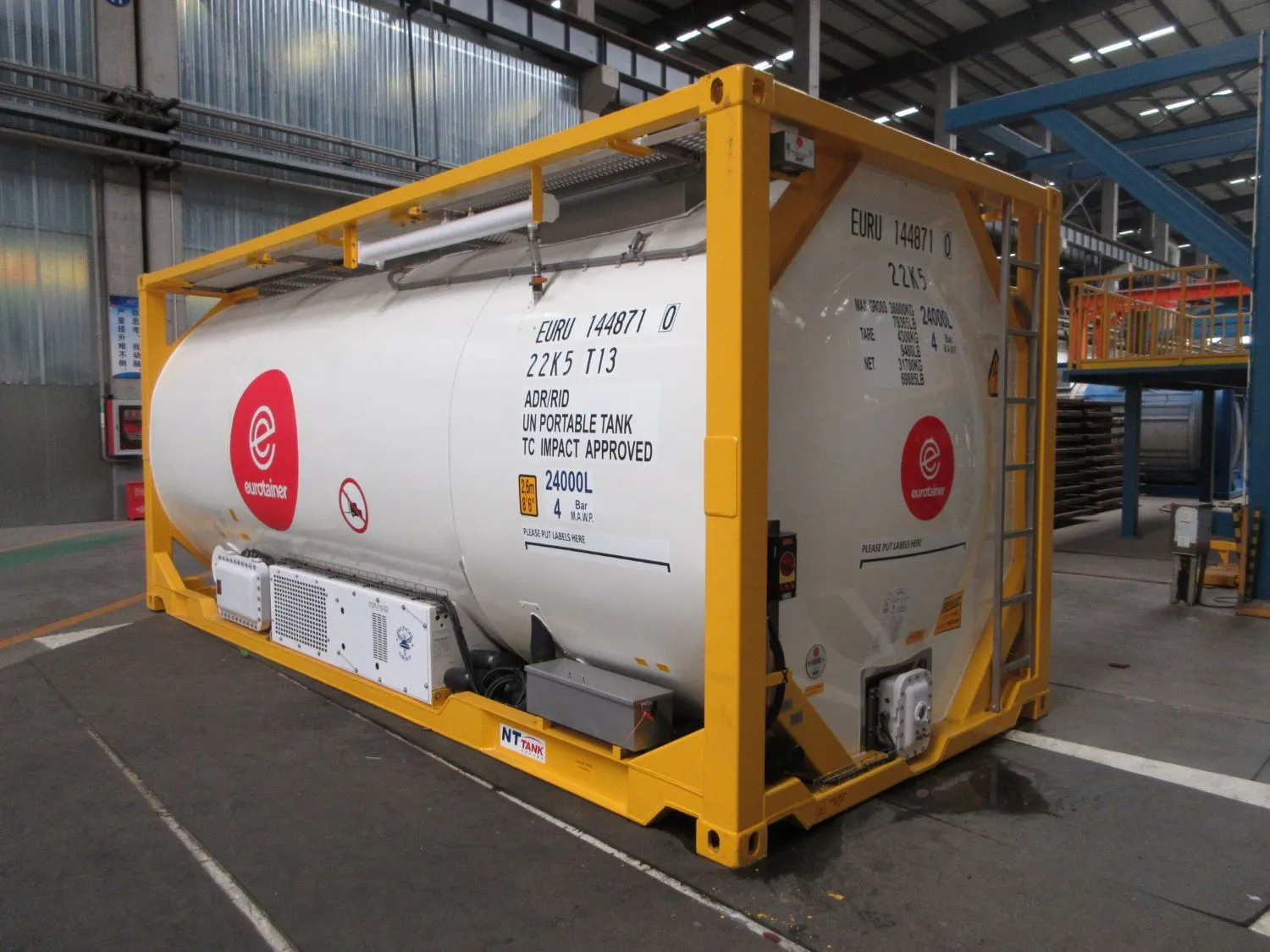
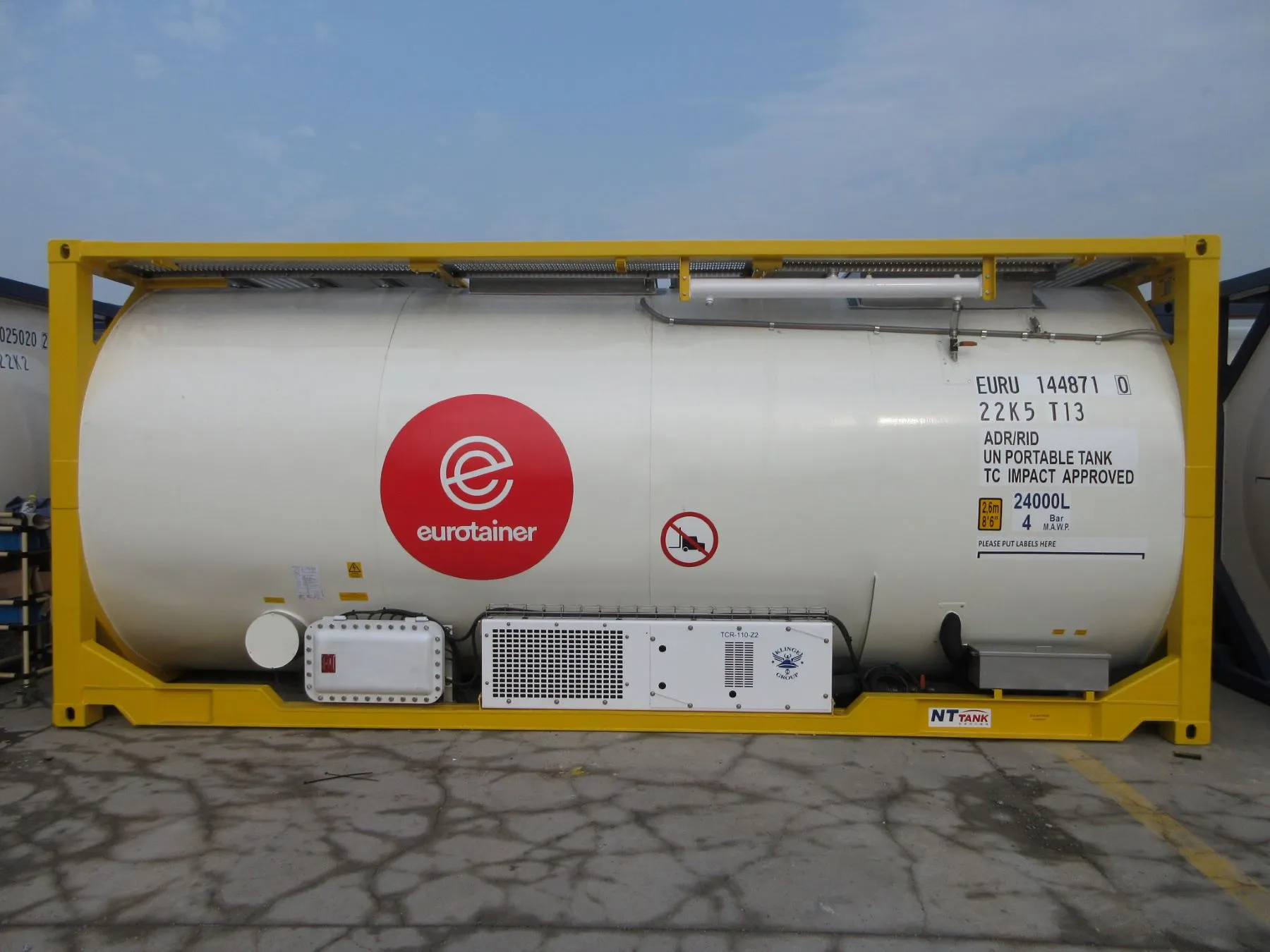
The refrigerated container configuration uses an electrically powered glycol system to cool products that are sensitive to high temperatures.
Propylene glycol is specified for food-grade applications, while ethylene glycol is specified for non-food-grade applications. The system maintains cargo and cooling liquid temperatures from -20F (-29C) to 84F (29C) and is designed to function in ambient temperatures from -40F (-40C) to 122F (50C).
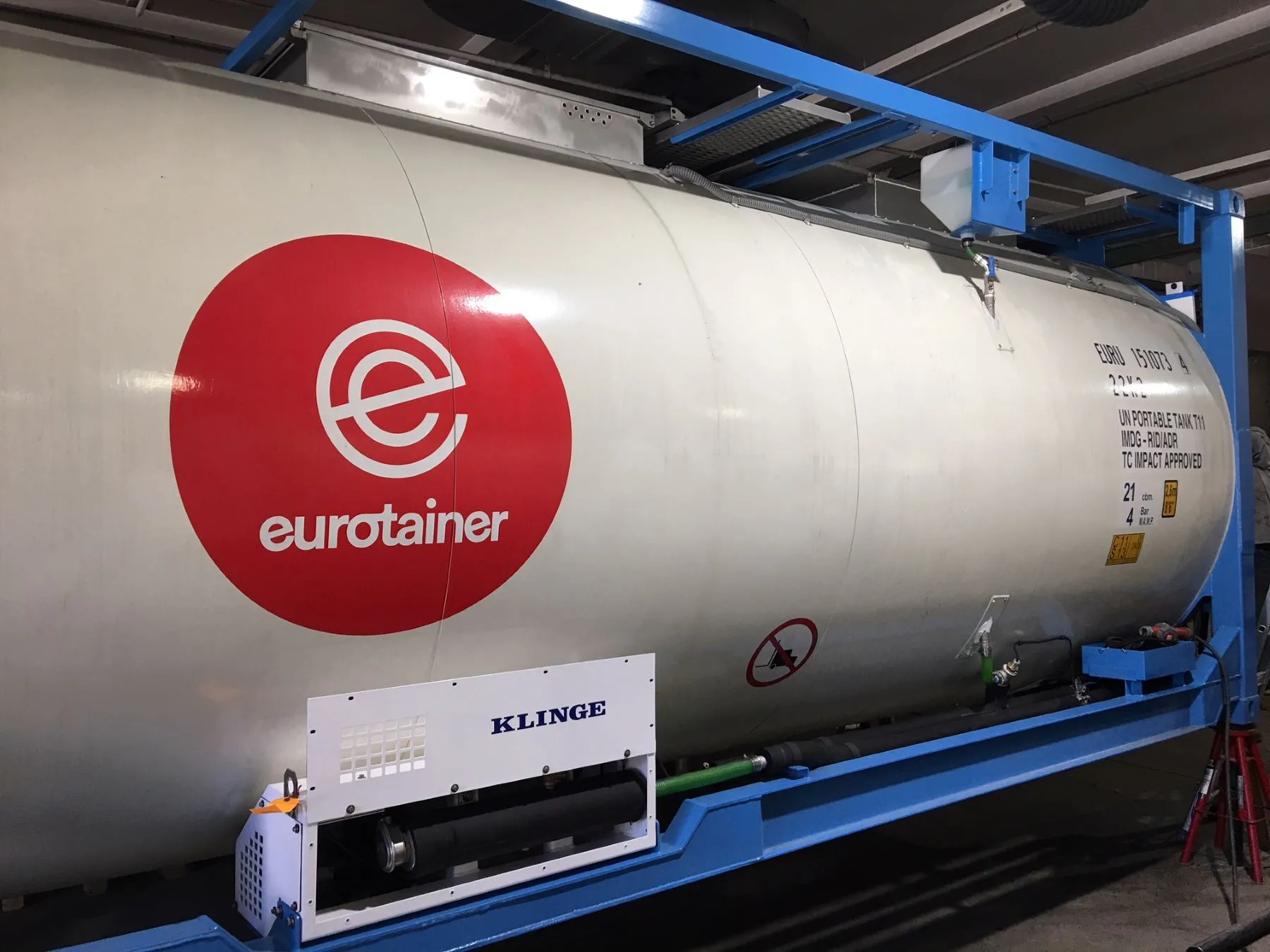
For products that need to remain in liquid form or at an elevated temperature, Eurotainer specifies an electric powered glycol pump system. Electrically heat traced systems providing circumferential heating are also available.
The glycol pump heater configuration covers tank capacities from 10000 to 24000 liters, with a heating power of 10 – 12 kW. Regulated heating is used to prevent thermal shock to sensitive products, and synthetic oils may be used for high-temperature heating.
The electrically heat traced configuration uses chemically resistant heating cables and offers 15 kW heating power. It allows the tank to be maintained or re-heated between ambient temperature and 200°C.
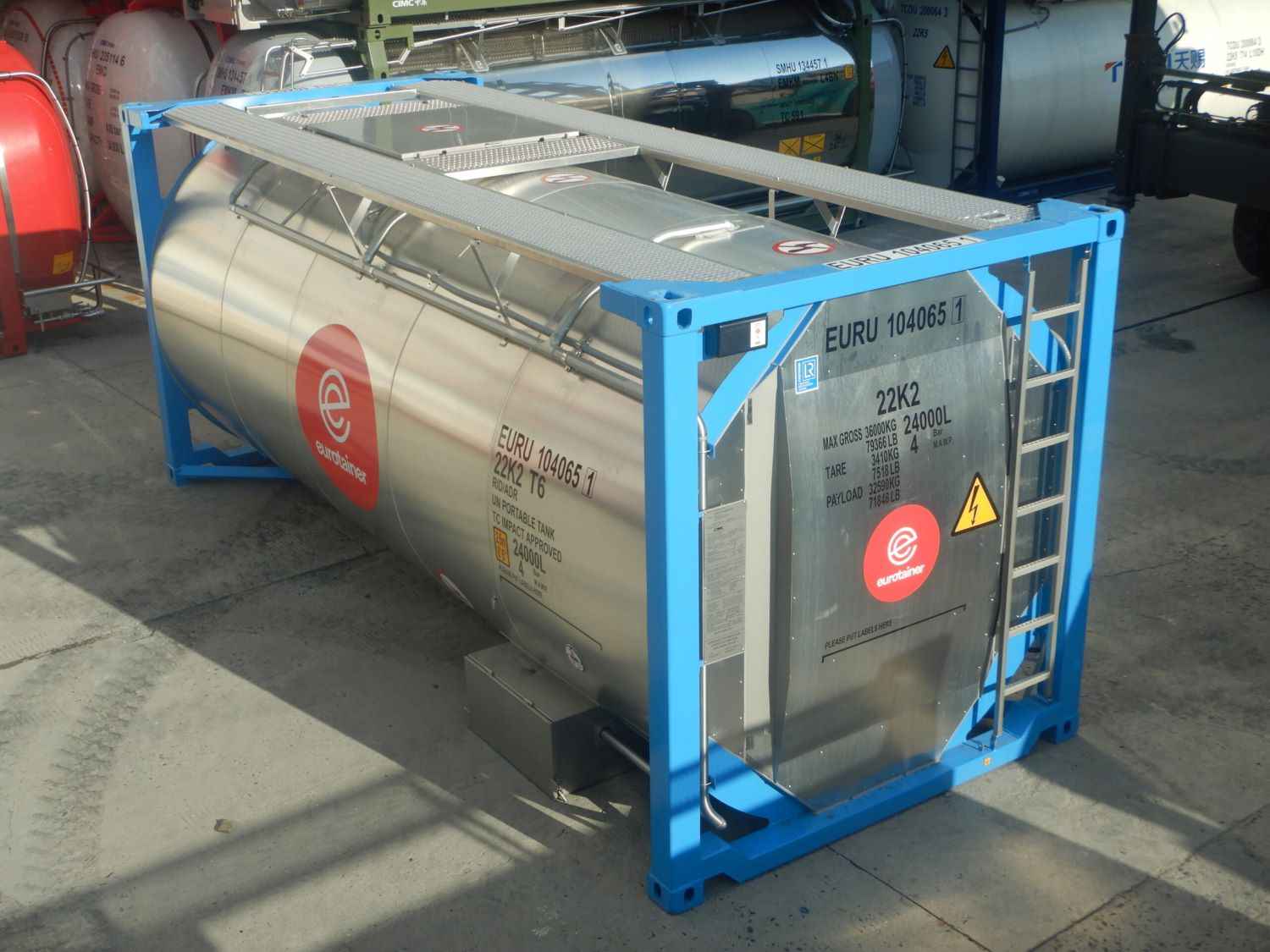
The high insulated tank container is designed to extend temperature hold time and reduce temperature loss or gain from the loading temperature. It is presented as an option when a separate heating system is not preferred and is identified as ideal for shorter transit time.
These tanks feature insulation thickness from 60 to 100 mm, using insulation media including Rockwool and Polyurethane foam. They can also be fitted with coils for heating or cooling with glycol, water or steam.
This configuration therefore provides an insulated container option within Eurotainer’s temperature controlled liquid container range.
Temperature control systems can be dual, providing alternatively heating and cooling to maintain the product in a set temperature range.
These solutions combine temperature-control equipment with compact designs that fit within the frame of the tank container, supported by a global service and parts network.
Depending on the configuration, additional options include heating and cooling coils, product recirculation, mixing and agitation systems, telemetry, temperature data loggers, alarms, additional barrel insulation and combinations of heating and cooling systems.
Eurotainer’s range provides three documented approaches for managing the temperature of liquid products: active refrigeration, active heating and high insulation. This makes it possible to study a configuration according to whether the product needs to be cooled, kept liquid or at an elevated temperature, or protected from temperature loss or gain.
The equipment is complemented by compact designs fitting within the tank container frame, a global service and parts network, and technical and Maintenance & Repair personnel worldwide.
For applications requiring monitoring or additional temperature management, the documented options include telemetry systems, data loggers, alarms, additional insulation and combined heating and cooling systems.
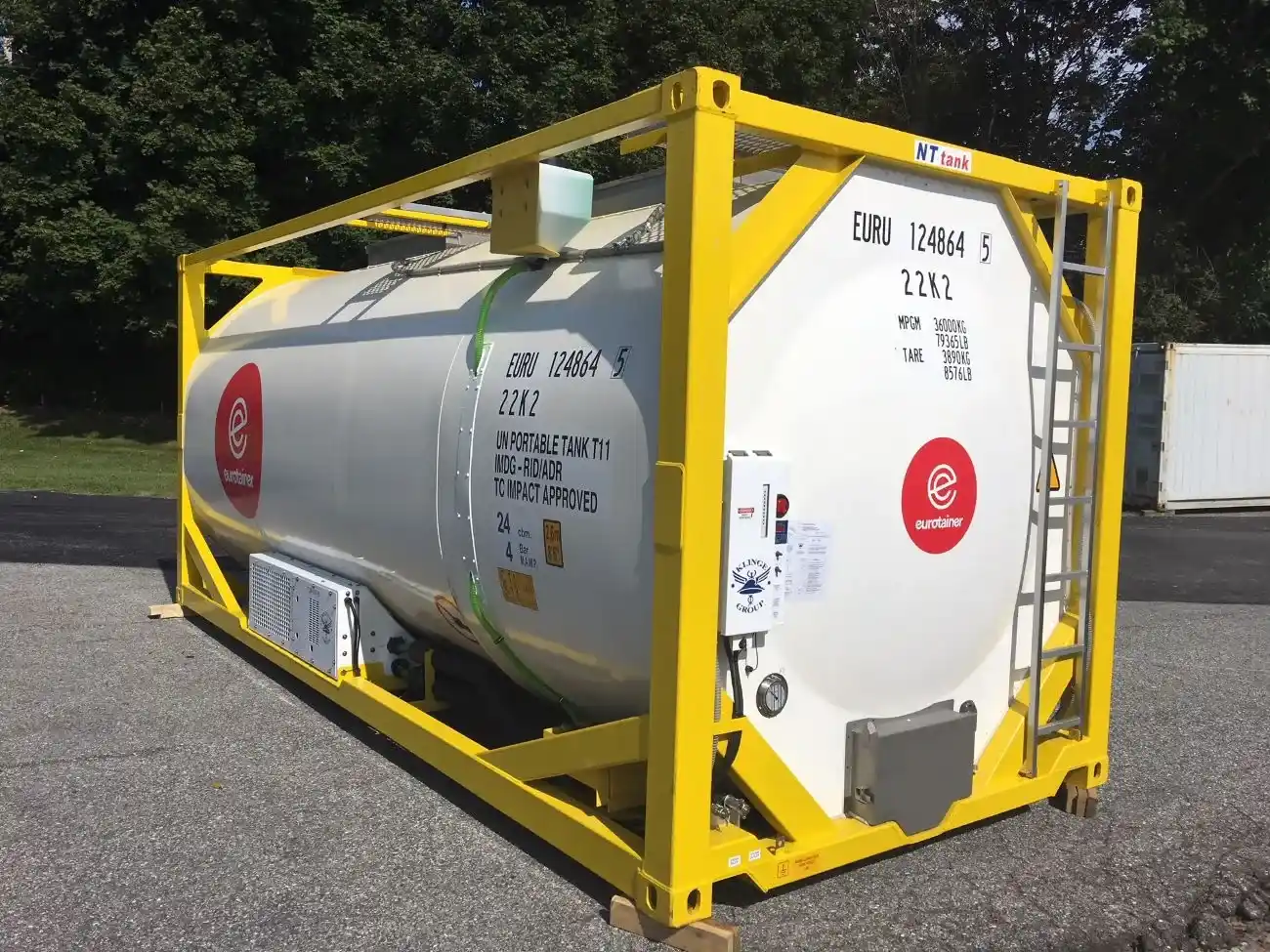
The choice between a heated, high insulated or refrigerated container depends on the required temperature-control approach. Heating systems are described for products that need to remain in liquid form or at an elevated temperature, while refrigerated systems are intended for products sensitive to high temperatures. High insulated configurations are used to extend temperature hold time and reduce temperature loss or gain.
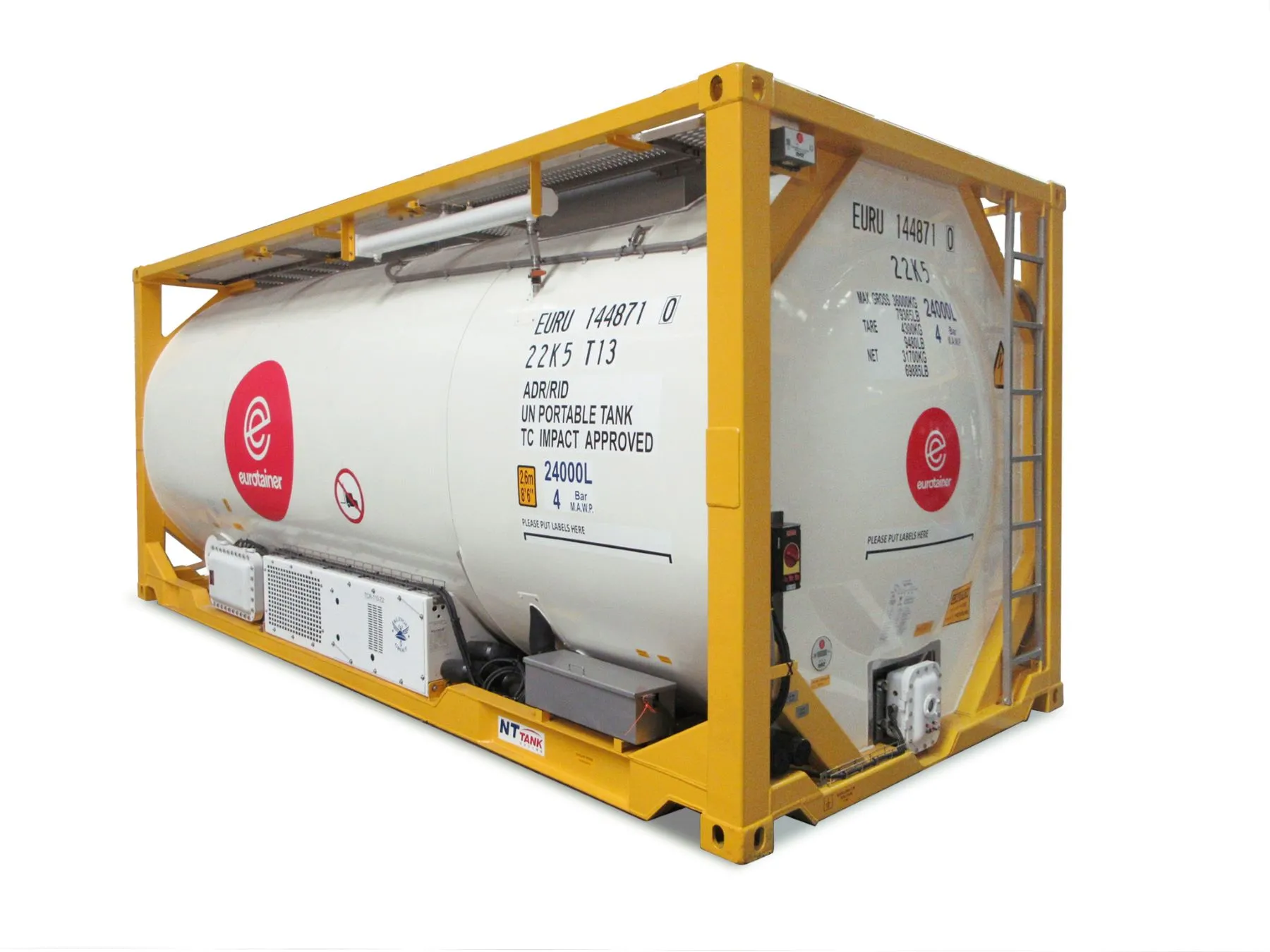
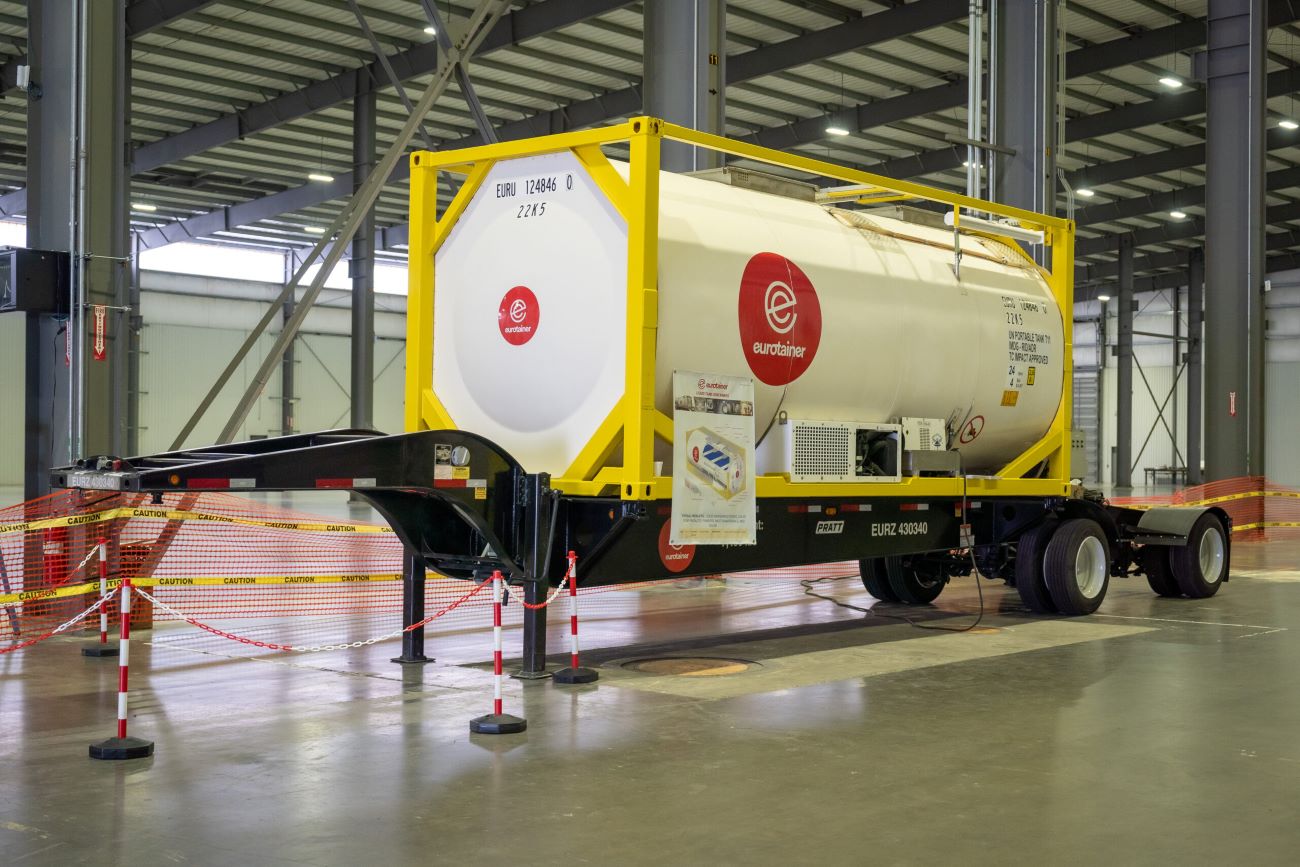
Please Note: This file contains proprietary information that is property of Eurotainer S.A., France. It is intended for the exclusive use of our customers for information and/or service purposes. The recipient agrees not to reproduce or copy this document or its contents in whole or in part without prior written permission from Eurotainer S.A.
Three types are specified: refrigerated, heated and high insulated tank containers. Refrigerated units use electrically powered glycol systems, while heated configurations can use an electric powered glycol pump system or electrical heat tracing. High insulated tanks use above-standard insulation thickness to extend temperature hold time and reduce temperature change.
The refrigerated system maintains cargo and cooling liquid temperatures from -20F (-29C) to 84F (29C). It is specified to function in ambient temperatures from -40F (-40C) to 122F (50C).
Glycol pump heated tanks are specified from 10.000 to 24.000 liters. Electrically heat traced tanks are specified from 14.000 to 21.000 liters, although larger capacities are described as suitable with a recommendation not to exceed 21m³ to allow sufficient tank insulation.
The documented insulation thickness ranges from 60 to 100 mm, with insulation media including Rockwool and Polyurethane foam.
The listed industry applications are Food and Beverage, Resins and urethanes, Medical and pharmaceutical, Waxes and Latex, Chemicals, Mining, Military.