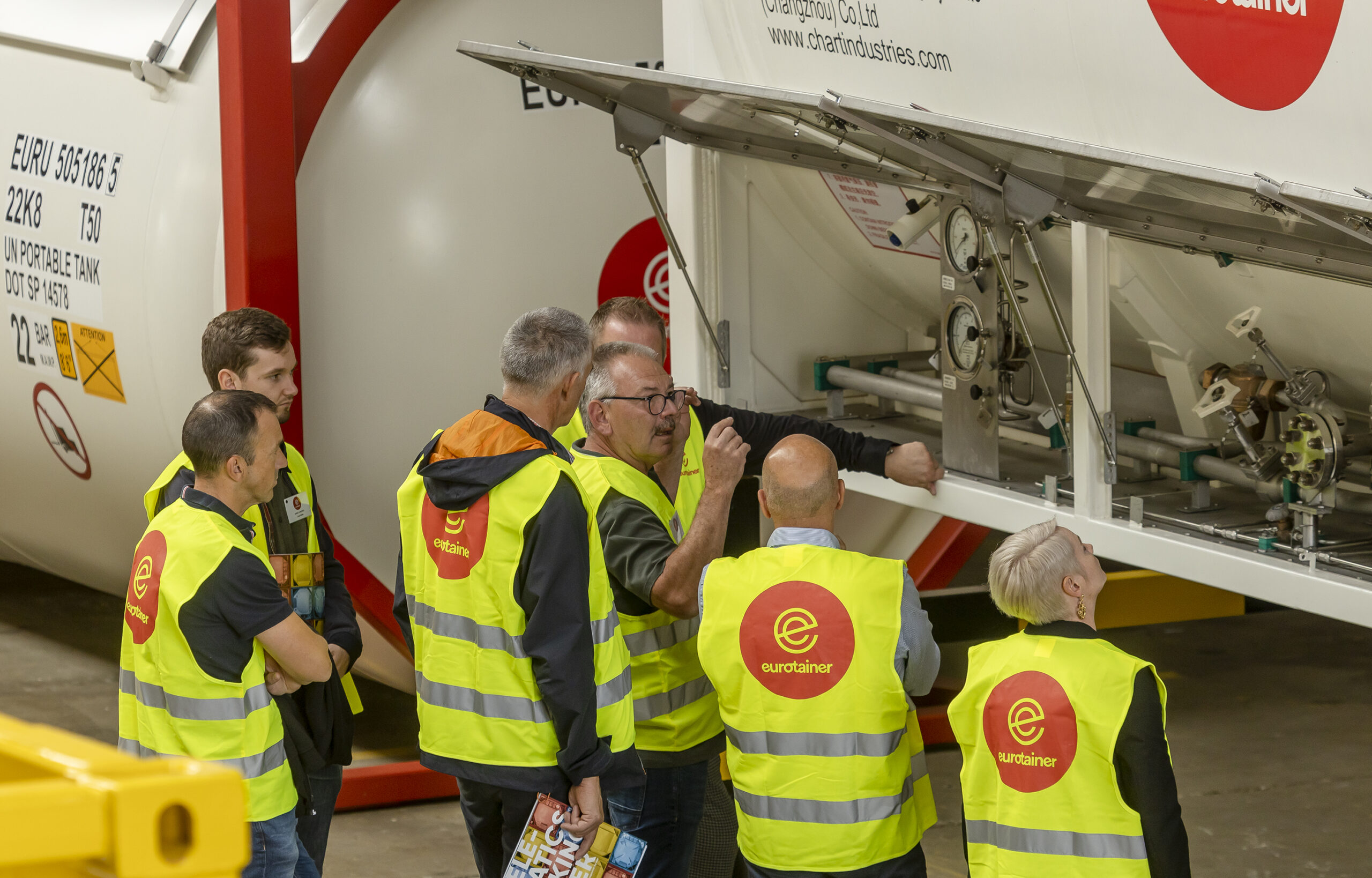
The number of tank containers dedicated to the carriage of gases has grown significantly over the past ten years. The ability to ship gases in quantities up to 6000 gallons/24000 liters has changed the gas industry.
The use of gas tanks for the shipment of refrigerant/flurochemicals has become the predominant use of these intermodal assets.
A few factors have contributed to this growth :
1. The increase in the global demand for air conditioning and refrigeration systems. As growing economies mature and their citizens see an increase in personal wealth there has a been a corresponding increase in the demand for air conditioning in homes and offices, refrigeration for food and with the financial capability to buy a car comes the demand for air conditioning in the car.
2. The development of a number of “blends” and new CFC-friendly refrigerant gases. The Montreal and Kyoto Protocols have set goals for developed and developing countries for the elimination of gases that contribute to ozone depletion. The production of these gases is starting to decrease while the new gases are ramping up production. The need for tank containers to carry both types of gases has increased the global demand for this type of equipment.
3. The development of better tank containers for the carriage of refrigerant gases. The installation of zinc linings in gas tanks has helped reduce the need to filter gases after delivery. The presence of rust in the product is virtually eliminated when transported in a zinc lined tank. Additional advances in the type of steel used in gas tanks have produced lighter tare weight containers that increase the payloads for every shipment. Eurotainer was the leader in adopting this new technology and was the first leasing company to offer this new gas tank design.
Eurotainer is also supplying ISO TANKS to transport non-refrigerant liquefied gases.
In addition to refrigerant gas tanks, Eurotainer offers equipment that can be utilized for the transport and storage of non-refrigerant liquefied gases. These gases include ammonia, propane, butene, methyl chloride, LPG and others. These gases are used in a wide variety of applications including :
- Manufacturing of explosives
- Mining
- Pharmaceuticals
- Food and beverages
- Oil refining
- Silicones
- Electronics
- Solvents
- Rubber production
- Manufacturing of fertilizers
The Eurotainer cryogenic tank container allows industrial companies and other users to ship these gases via truck, rail or ship. Our cryogenic tank container has the lowest tare weight for the large capacity offered available. Shippers can now optimize payloads if shipping locally or globally.
The Eurotainer cryogenic tank container allows users to increase hold times from 103 to 122% longer than traditional cryogenic tanks. Increasing hold times by 40 to 60 days allow gas manufacturers to expand their customer base and supply chain to other continents and a whole world of new customers. Fortunately, Eurotainer has a global depot network of tank container maintenance, repair and testing facilities to support your advancement into new markets and regions.
Eurotainer has the world’s fleet of gas tanks and is the world leader in gas tank container technical expertise.
Eurotainer’steam of experts can help you design a gas tank that meets your unique requirements. Our equipment is available in North America, South America, Europe, Africa, Asia and Australia.
Eurotainer is constantly building new equipment to upgrade our fleet and offer our customers the latest in gas tank technology.
Our tank containers are capable of carrying a wide variety of gases. A partial list can be found below.
Refrigerants/Fluorochemicals
- R12
- R22
- R13
- R113
- R114
- R32
- R143a
|
- R1113
- R124
- R21
- R125
- R1216
- R1234
|
- R142b
- R407
- R410a
- R134a (Pharmaceutical and chemical grades)
- R227 (Pharmaceutical and chemical grades)
|
Industrial/cryogenic gases
- Chlorine
- Argon
- Nitrogen
- Oxygen
- Ethylene
- LNG
|
- Ethane
- Nitrous Oxide
- Trifluoromethane (R23)
|
|
Other gases
- Ammonia
- Propane
- LPG
- Dimethylamine, methylamine and trimethylamine
- Methyl Chloride
- Methyl bromide
|
- Vinyl bromide
- Vinyl chloride
- Vinyl methyl ether
- Butadiene
- Cyclopropane
- Dimethylether
- Ethylamine
|
- Propylene
- Trifluorochloroethylene, stabilized
- Propylene
- Ethyl chloride
- Butane, Butene, Isobutylene, isobutane and Butylene
|